 Skip to content

Choosing the right broadband technology can be confusing. FTTP and FTTC are two popular options. Each has its own strengths and weaknesses.
FTTP, or Fibre to the Premises, offers a direct fibre connection. This means faster speeds and more reliability. It’s ideal for heavy internet users and businesses.
FTTC, or Fibre to the Cabinet, uses a mix of fibre and copper cables. It’s more widely available and often cheaper. This makes it a good choice for average home users.
Understanding the differences between FTTP and FTTC is crucial. It helps you make an informed decision about your internet needs.
In this article, we’ll compare FTTP and FTTC in detail. You’ll learn about their benefits, drawbacks, and which might be better for business internet connectivity.
What Are FTTP and FTTC?
FTTP stands for Fibre to the Premises. It delivers a full fibre optic connection directly to your business. This ensures high-speed internet with low latency.
FTTC, on the other hand, refers to Fibre to the Cabinet. Here, fibre cables run to a nearby street cabinet. The final stretch to your premises uses existing copper cables.
Understanding these terms is vital for making a better choice. Here’s a brief breakdown:
- FTTP: Direct fibre connection; high speed and reliability.
- FTTC: Combination of fibre and copper; lower cost, wider availability.
FTTP is often marketed as “full fibre” or “fibre to the home” (FTTH). It supports advanced technologies with ease. FTTC, sometimes known as “fibre to the node” (FTTN), acts as a
bridge between older networks and modern broadband.
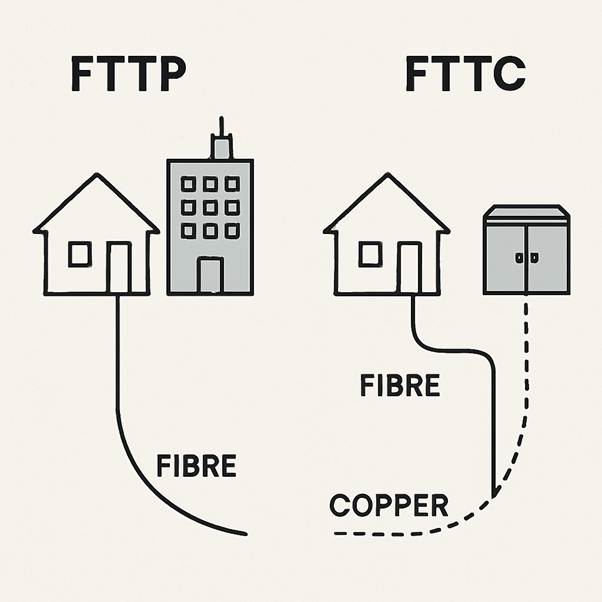
Recognising what FTTP and FTTC offer guides you towards the best internet experience. Choosing between them depends on your needs and location.
How Do FTTP and FTTC Work?
FTTP transmits data through fibre optic cables from the provider right to your doorstep.
This direct connection minimises interference, enhancing speed and stability. The lack of copper cables ensures almost perfect data transmission.
FTTC uses fibre optic cables to connect the main network to a nearby cabinet. From there, the signal travels through copper cables to your location. This segment of copper can lead to slower speeds than a full fibre setup.
Here’s a quick explanation of how they function:
- FTTP: Direct fibre connection to premises; minimal interference.
- FTTC: Fibre to cabinet; copper to premises.
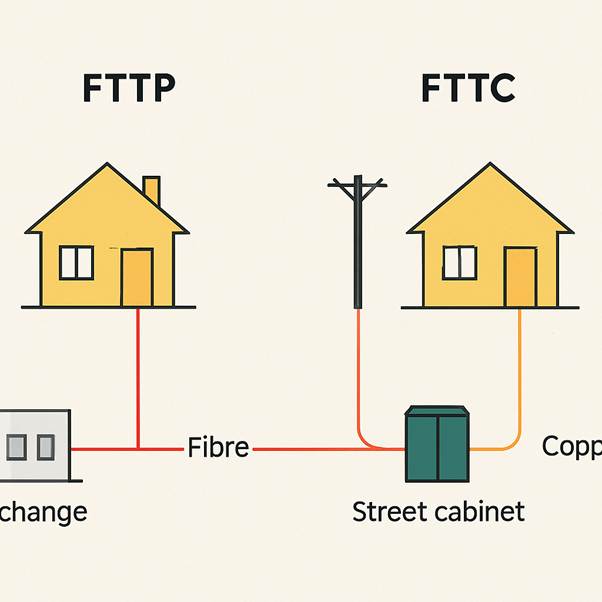
FTTP excels at providing consistent, high bandwidth suitable
for intensive internet activities. FTTC is a practical choice for areas where
extending fibre is costly, serving efficiently for standard use.
Speed and Reliability Comparison
When it comes to speed and reliability, FTTP stands out due to its all-fibre network.
Its capacity for high-speed internet is virtually unmatched.
Users can experience symmetrical upload and download speeds, which are perfect
for online gaming and video conferencing.
FTTC, although not as fast, delivers decent speeds suitable
for typical household usage. The hybrid fibre-copper system can result in
reduced speed over longer distances. However, for most users, it effectively
supports streaming and browsing needs.
A notable advantage of FTTP is its resilience against
interference and signal loss. This makes it ideal for tasks that demand a
stable connection. FTTC’s reliance on copper can sometimes lead to
fluctuations, particularly during peak times or adverse weather.
Here’s a simplified breakdown of their speed and
reliability:
- FTTP: High speeds, symmetrical, reliable.
- FTTC: Adequate speeds, may vary, location-dependent.
by lonely blue (https://unsplash.com/@lonelyblue)
Ultimately, FTTP is better for those seeking top-tier internet performance, while FTTC meets the demands of regular users efficiently.
Installation and Availability
FTTP installation can be more intrusive compared to FTTC. It
often requires significant infrastructure changes, especially in older
buildings. The process involves running fibre optic cables directly to the
premises.
Conversely, FTTC installations are less disruptive. The
fibre reaches a nearby street cabinet, from which existing copper cables
complete the connection to homes or businesses. This infrastructure uses
existing pathways, which minimises hassle.
In terms of availability, FTTC is more common. Its lower
installation costs and existing network make it widely accessible. However,
FTTP is slowly expanding, driven by technology advancements and government
initiatives.
Here’s a snapshot of their installation and availability
features:
- FTTP: Potentially disruptive, less widely available, expanding reach.
- FTTC: Easier to install, more common, uses existing networks.
In summary, FTTC is more readily available, but FTTP is gaining ground as a future-oriented solution.
Cost Differences
The cost differences between FTTP and FTTC can be
significant. FTTP generally involves higher installation expenses due to the
need for laying new fibre optic cables. This can result in a heftier initial
investment.
In contrast, FTTC typically costs less to set up. It uses
existing copper cables, which reduces installation expenses. This makes it a
more budget-friendly option for many consumers.
Monthly pricing can vary based on service providers and
plans. However, FTTP services often carry a premium due to their enhanced
capabilities. Here’s a quick breakdown:
- FTTP: Higher setup costs, potential for higher monthly fees.
- FTTC: Lower initial costs, typically more affordable ongoing charges.
Ultimately, the decision may hinge on balancing upfront
costs with long-term benefits.
Pros and Cons of FTTP vs FTTC
Each broadband option comes with its own set of advantages and drawbacks. Understanding these can help in making a well-informed decision.
FTTP Pros:
- Direct fibre connection to premises
- Higher speeds and reliability
- Future-proof technology
FTTP Cons:
- Higher installation cost
- Limited availability in some areas
- Installation can be disruptive
FTTC Pros:
- More affordable setup
- Wider availability
- Uses existing infrastructure
FTTC Cons:
- Speed can degrade over distance
- Copper segment can impact reliability
- May require future upgrades as demands increase
Ultimately, the choice between FTTP and FTTC will depend on
individual needs and circumstances. Consider both the immediate and long-term
implications to decide which option aligns best with your situation.
Which Should You Choose?
Choosing between FTTP and FTTC depends on several factors.
Your location can significantly impact the availability of each service. FTTP
might not be available in every area yet, while FTTC typically enjoys broader
coverage.
Consider your internet usage patterns. FTTP is ideal if
you’re a heavy user needing robust, high-speed connections. Activities like
gaming, streaming, or remote work benefit from its superior speed and
reliability.
Budget considerations should not be ignored. FTTC is often
more affordable, making it a practical choice for those with standard
requirements. Here’s a quick guide to help:
- Heavy users, businesses, or tech enthusiasts: Choose FTTP
- Average users on a budget: Opt for FTTC
Conclusion
In conclusion, the choice between FTTP and FTTC hinges on needs and availability.
FTTP offers superior speed and future-proofing, making it ideal for demanding users. Conversely, FTTC serves as a reliable, budget-friendly option for average users. Evaluate your internet needs and make an informed decision accordingly.


