 Skip to content

Imagine sending a physical letter across the world and
having it arrive the exact moment you let go of the envelope. That isn’t just a
clever metaphor; it is essentially what happens every time you click a movie
title on a business internet connection. For anyone who has ever stared
helplessly at the dreaded buffering wheel while the rest of the house tries to
use the Wi-Fi, this leap in speed feels like absolute magic.
For over a century, our communication travelled mostly
through old-fashioned copper wires originally designed for basic telephone
calls. While copper was revolutionary in the 19th century, industry data
reveals that electrical signals degrade quickly as they travel long distances
over metal, causing those frustrating speed drops in your living room. To go
faster and further, engineers had to rethink the entire journey from the
provider to your router.
So, how exactly does fibre-optic broadband work? Instead of
pushing electrical currents through heavy metal cables, this 21st-century
technology uses strands of perfectly clear glass roughly the thickness of a
human hair. By swapping electricity for pure light, these microscopic glass
tubes can carry vast amounts of information across cities and oceans without
losing signal strength along the way.
Translating an entire movie into illumination might sound
complicated, but the secret lies in a highly precise light pulses data
transmission process. Think of it as a high-speed digital Morse code, where
invisible lasers flash on and off millions of times per second to send data
straight to your home. In practice, this eliminates the distance-related
slowdowns of the copper era, keeping your video calls crystal clear and finally
solving the buffering problem once and for all.
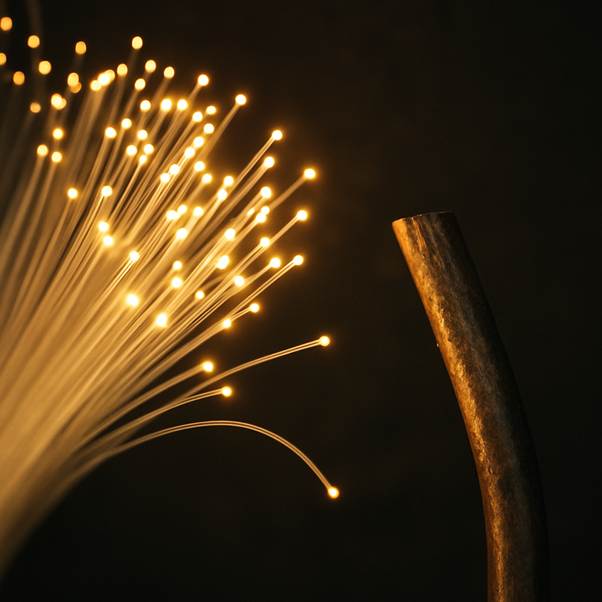
Why Your Internet is Moving from Copper Pipes to Glass Strands
For decades, our internet travelled through copper wires
built for old-fashioned telephones. While great for voice calls, sending
high-quality video streams requires a much bigger digital pipe. To eliminate
constant buffering, providers had to stop sending electricity through metal and
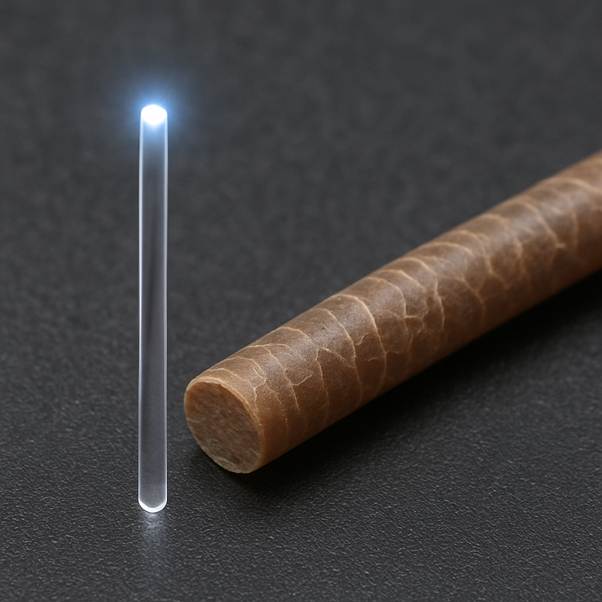
start sending light through glass. Astonishingly, the material used for this
job is almost invisible, if you held the core carrying your data, it would be
barely visible to the naked eye.
The biggest problem with those older metal networks is
exhaustion. When data travels as an electrical current, it constantly fights
against the metal itself, a natural friction known as electrical resistance.
Think of it like trying to spray water through a long, rusty garden hose; by
the time it reaches the end, it is just a trickle. Light, on the other hand,
coasts through pure glass with barely any effort. Because glass doesn’t cause
this electrical friction, your movie arrives perfectly crisp, even if the
server is miles away.
This stark contrast explains the vast difference in fibre
optic cable vs copper wire speed. It all comes down to “bandwidth,”
which is simply the amount of data a cable can handle at one time. While a
copper wire gets congested easily when everyone in the house is using the
Wi-Fi, the bandwidth capacity of glass strands is massive. Here is how the two
materials compare:
- Speed: Copper struggles with heavy household traffic; glass easily handles
multiple 4K streams instantly. - Distance: Electrical signals fade after a few miles; light travels across regions
without losing strength. - Durability: Copper eventually corrodes; buried glass ignores underground moisture and temperature changes.
- Weight: Metal cables are bulky and heavy; glass strands are flexible and
feather-light.
Swapping thick metal for microscopic glass sounds like a
perfect upgrade, but it introduces a fascinating new challenge. If a beam of
light hits a curve in a clear glass tube, shouldn’t it shoot straight out the
side? Fortunately, engineers solved this using a clever illusion, which brings
us to the “Hall of Mirrors” trick: how light stays trapped inside a
tiny tube.
The ‘Hall of Mirrors’ Trick: How Light Stays Trapped
Inside a Tiny Tube
Pointing a torch around a corner simply doesn’t work,
because light loves to travel in a perfectly straight line. When engineers
began laying glass cables underground, they faced this exact problem: the
cables had to bend around streets and snake into homes. If light naturally
shoots straight forward, bending a clear glass tube should mean the data just
spills out the sides, instantly ruining your connection.
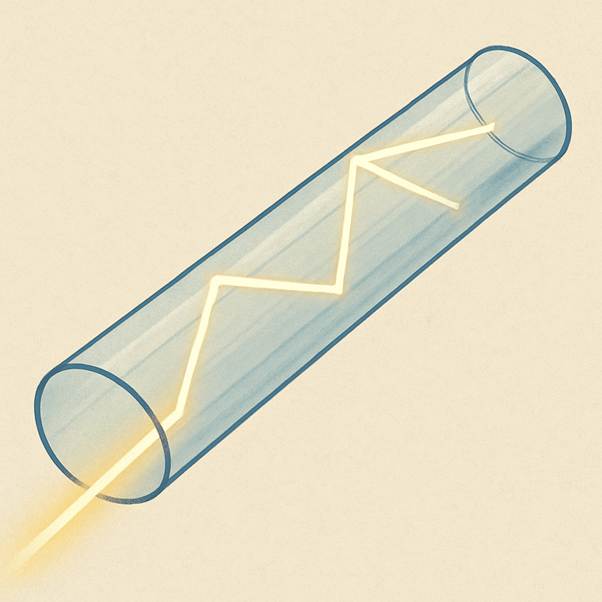
To keep your data safely trapped, scientists designed these
glass strands to act like an endless hall of mirrors. They wrap the central
core in a second layer of different glass, creating a barrier that bounces the
light inward. Instead of escaping when the cable curves, the light ricochets
off the walls in a zig-zag pattern. This clever trick, known scientifically as
total internal reflection in optical fibres, ensures your video call never
leaks into the dirt.
Even with this brilliant bouncing act, no journey is
completely effortless. Over incredibly long distances across the country, the
light can bump into microscopic impurities in the glass and slowly lose its
brightness. This gradual dimming is called signal attenuation in fibre optic
cables, though it happens much slower than electrical fading. To fix this minor
fading, network providers simply place tiny amplifiers along the route to give
the light a fresh boost of energy.
A steady, bright glow shining from a router cannot deliver a
high-definition movie on its own. The magic only happens when lasers manipulate
that light to carry actual, usable information, turning your favourite media
into millions of precise flashes.
Digital Morse Code: How Lasers Turn Your Movies into Millions of Light Flashes
Sending a message to a friend across a valley at night using
only a torch requires flicking the switch on and off to create a pattern. If
you just leave the beam turned on, your friend sees a glow but learns
absolutely nothing. This rapid switching is exactly how your broadband provider
sends a whole season of your favourite television programme down a glass tube.
At its core, every piece of digital media you consume is
just a massive collection of ones and zeros. Computers and smartphones process
information in this simple, two-step language, known as binary code. Because
there are only two options, a one or a zero, light is the perfect tool for the
job. A brilliant flash of light represents a one, and a brief moment of
darkness represents a zero.
To create these rapid signals, network engineers use
specialised equipment rather than a standard household bulb. They rely on
highly precise lasers and LEDs in data communication to handle the heavy
lifting. Unlike a normal bulb that takes a fraction of a second to warm up or
dim, these tiny lasers snap on and off with absolute, immediate perfection.
They sit at the provider’s end of the cable, reading the ones and zeros of a
webpage and instantly translating them into a flickering beam.
What makes this technology feel like magic is the incredible
speed behind the light pulses data transmission process. We aren’t talking
about a few simple blinks a second; these lasers are firing billions of times
in the blink of an eye. When you request a high-definition movie, the laser
blasts an impossibly fast, invisible strobe light through the glass. Your
router then catches these flashes and translates them back into the moving
pictures on your screen without a single moment of lag.
However, this seamless translation of light only works
flawlessly if the glass journey goes all the way to your home. If that
brilliant, flickering laser beam hits an old-fashioned copper wire halfway down
your street, everything slows down. That sudden bottleneck is exactly why
verifying a direct connection over older street-level setups is crucial for
getting the speeds you actually pay for.
Why ‘Fibre to the Cabinet’ Isn’t Real Full Fibre—And How
It Affects Your Speed
Buying a sports car only to be restricted to a school zone
perfectly illustrates a connection known as FTTC, or “Fibre to the
Cabinet.” When broadband providers first started upgrading their networks,
they ran high-speed glass cables to those green metal boxes sitting at the end
of your street. But from that cabinet to your living room, a stretch often
called “the last mile” the internet still travels over ancient copper
telephone wires. The brilliant, flashing light beam hits the cabinet, converts
back into sluggish electricity, and struggles through a bottleneck just before
reaching your house.
Upgrading to a direct connection, known as FTTP (Fibre to
the Premises) or “Full Fibre,” removes this bottleneck entirely. The
difference between FTTP vs FTTC heavily impacts your daily use:
- The Material: FTTC uses a hybrid of modern glass and old copper, whereas
FTTP runs a single, unbroken glass thread straight through your front
wall. - Distance Decay: Copper signals get weaker the further your house is from the
street cabinet, but pure glass delivers the same blazing speed whether you
are ten feet or ten miles away. - Weather Resistance: Heavy rain and temperature changes can corrode or disrupt
underground copper lines, while buried glass remains perfectly unaffected
by the elements.
Eliminating that final stretch of copper is the only way to
meet modern gigabit broadband infrastructure requirements. When your connection
is pure glass from start to finish, you unlock speeds fast enough to download
massive video games in minutes and stream multiple 4K movies at once. Because
the light pulses never have to squeeze through a degrading electrical wire,
your household’s internet becomes completely immune to the dreaded evening
slowdown when all your neighbours log on.
Getting that pure beam of light directly into your living
room is a massive upgrade, but you cannot plug a glass tube straight into your
laptop. For your devices to actually understand the flashes arriving from the
provider, that strobe light needs one final translation.
Meet the ONT: The Small Box That Translates Light into Wi-Fi
Your smartphone and smart TV only understand electrical
signals, but your new full-fibre connection delivers data through blazing-fast
pulses of light. Before a movie can reach your screen, that signal needs a
translator. If you tried plugging a glass cable straight into your laptop,
nothing would happen because the device simply cannot read light. The data has
arrived perfectly at your house, but it must be converted back into electricity
to be useful.
To solve this, internet providers mount a small white box on
your interior wall right where the glass enters. An optical network terminal
(ONT) is essentially a high-speed bilingual interpreter. A tiny sensor inside
catches the microscopic flashes bouncing down the cable. The moment those light
pulses hit the sensor, the terminal instantly transforms them into the standard
electrical data your home gadgets comprehend.
Upgrading your home means the fibre optic broadband
installation process requires a bit of minor engineering work. A technician
will drill a small hole through your exterior wall to feed the glass strand
safely inside before securing the terminal box. Once this translator is powered
on, it connects directly to your standard Wi-Fi router. Think of the terminal
as the interpreter receiving the message, while your router is the megaphone
broadcasting it to every room.
Securing this dedicated hardware indoors ensures the
pristine light completes its journey without interference. By handling the
delicate translation process safely inside your living room, the actual network
remains completely sealed off from the elements outdoors. This physical
isolation is precisely why your new setup will consistently outlast those old
telephone wires buried under the pavement.
Why Fibre Beats Copper in a Rainstorm: The Secret to Total Reliability
Internet connections often drop out during heavy
thunderstorms because older homes rely on buried copper telephone wires that
act like giant underground sponges for moisture. When pipes leak or heavy rains
soak the soil, water easily seeps into those ageing metal cables, causing them
to corrode and short-circuit. Because fibre relies on microscopic strands of
solid glass encased in protective plastic, it is completely waterproof. A
flooded street might cause traffic jams outside, but it will no longer interrupt
your streaming marathon inside.
Beyond simply surviving water, glass offers incredible
long-term durability because it cannot rust. As traditional metal wires age,
they physically break down, which causes the electrical data travelling through
them to weaken and slow down. Thankfully, signal attenuation in fibre optic
cables is incredibly low compared to this older technology. The light bouncing
through the glass core remains bright and strong for miles, meaning your
connection doesn’t silently degrade over the years just because the cables are
getting older.
Another hidden enemy of your network is invisible
electrical noise. Because old cables transmit data using electrical currents,
they are easily disrupted by nearby power lines, lightning strikes, or even
heavy household appliances turning on. Business fibre internet is vastly more reliable
because light is entirely immune to these magnetic forces. You could wrap a
glass cable directly around a high-voltage power line, and the flashes of
digital light inside would continue zipping along undisturbed.
Eliminating these physical and invisible hazards creates a
connection that is remarkably consistent day and night. Once you combine this
weather-proof glass foundation with the ability to send light in two directions
at once, you unlock symmetrical speeds and low latency.
Symmetrical Speeds and Low Latency: Why Gamers and Remote Workers Need Full Fibre
For years, internet providers only bragged about how fast
you could pull data from the web. But what happens when you need to send
something back? On older copper networks, uploading a video felt like pushing a
boulder uphill because the lines were built primarily for receiving. Full fibre
flips this script by acting as a wide-open, two-way superhighway. Since digital
light easily travels in both directions simultaneously without crashing, you
finally unlock symmetric upload and download speeds. Sending a massive
presentation to a colleague now takes just as little time as downloading a
high-definition movie.
Blistering speeds are wonderful, but they only tell half the
story of how “fast” your connection feels. Think of driving a sports
car: a high top speed is great, but if the engine hesitates for a full second
when you press the accelerator, the car still feels sluggish. In networking,
this vital reaction time is called latency, or “ping.” When looking
at a latency comparison between cable and fibre, older copper wires suffer
tiny, frustrating delays as electrical signals navigate through neighbourhood
cabinets. Conversely, a full fibre connection uses a pure, uninterrupted beam
of light, meaning your mouse click registers almost instantly on the server.
That lightning-fast reaction time is the secret ingredient
to a frustration-free digital home. While big download numbers dictate how fast
a new application installs, it is low latency that keeps your screen from
freezing mid-action. The benefits of full fibre internet for gaming are famous,
but this instant responsiveness transforms several daily tasks:
- Competitive Gaming: Button presses register in real-time, completely eliminating
dreaded lag. - Zoom Video Calls: Conversations flow naturally without those awkward,
delayed interruptions. - Virtual Reality: Digital head movements track perfectly to prevent motion
sickness. - Cloud Backups: Your phone syncs high-resolution photos instantly without
choking the rest of your network.
Upgrading your home to this incredibly responsive, two-way
foundation changes how seamlessly you experience the internet every day. Yet,
sending flashes of light to your local provider is only the very beginning of
the data’s journey. The same glass technology lets you video chat with someone
in Tokyo without a single stutter thanks to a marvel resting beneath the waves.
The Undersea Web: How Your Data Crosses Oceans Through Glass Pipes
When you send a message across the globe, it is tempting to
picture that data bouncing through space. The truth is, the modern internet is
shockingly physical. To cross vast oceans, your flashing light signal travels
through heavy, garden-hose-sized tubes resting directly on the seafloor.
This massive spiderweb is the undersea fibre optic cable
network, handling almost all international web traffic. While satellites can
beam internet to remote areas, sending signals into orbit takes too long,
creating frustrating lag. By keeping light inside submerged glass pipes, a
streaming movie from a foreign server reaches your television in the blink of
an eye.
Knowing this incredible infrastructure spans the planet
helps you appreciate the seamless connection right in your living room.
However, that global speed means very little if the final stretch to your
router relies on old, outdated copper wire. To truly join this worldwide glass
superhighway, you must verify what is plugged into your wall and ensure your
home is future-proofed.
Future-Proofing Your Home: How to Tell if You’re Getting the Real Deal
You no longer have to wonder how does fibre optic
broadband work every time you stream a movie without a hint of buffering.
By swapping electrical signals for pulses of light, this technology completely
bypasses the physical speed limits of old copper wires. Because glass can
handle virtually infinite amounts of data, upgrading your home is a permanent,
future-proof investment.
How do you know if you are actually getting this pure
connection? Before checking your local gigabit broadband infrastructure
requirements for an upgrade, test your current setup with this quick
“Full Fibre” checklist:
- Look for an ONT: Is there a small white box (Optical Network Terminal)
installed on your wall instead of a standard telephone socket? - Read the fine print: Does your internet contract specifically say
“FTTP” (Fibre to the Premises) or “Full Fibre”? - Verify the speed: Are your daily download speeds consistently testing over
100Mbps?
If you answered no, your home is likely still relying on a
slower copper hybrid. Checking your provider’s website for full fibre
availability in your area is the best practical next step. When you finally
make the switch, you’ll know exactly how those invisible flashes of light are
working their magic.


